"Not Tonight, Mate": A Field Guide to What Door Staff Actually Mean
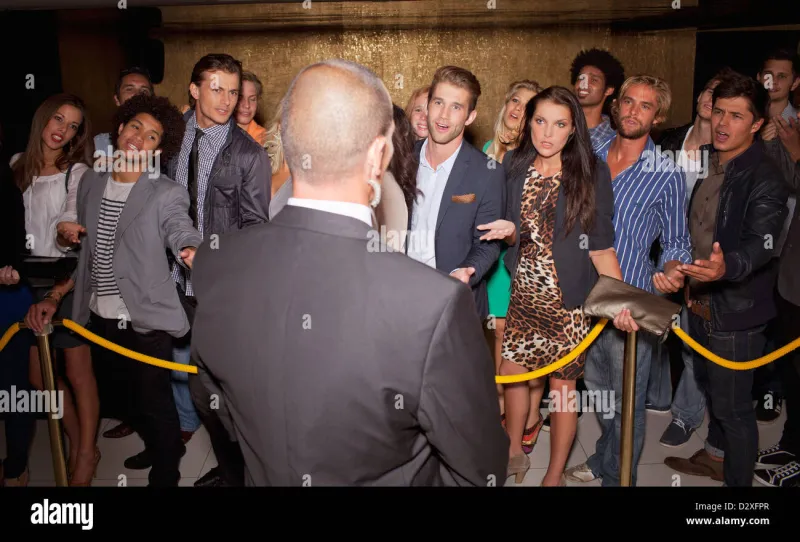
Photo: nightclub door bouncer rope queue London night, via c8.alamy.com
Stand outside any decent club in London past eleven and you'll hear it: a low, steady stream of phrases that sound like small talk but function like traffic signals. Door teams don't shout. They don't need to. They've got vocabulary — and if you learn to listen properly, the queue stops being a lottery and starts being a conversation.
We spent a few weekends loitering (politely) outside venues in Shoreditch, Soho and Elephant with a notebook, then sat down with three veteran door supervisors — combined experience north of forty years — to decode what's actually being said. What follows is a translation guide. Treat it like a phrasebook for the most exclusive language school in the city.
"We're at capacity"
What it means: sometimes literally true, often not.
"Capacity's a number," one veteran told us, "but it's also a lever." If the room genuinely is packed, the phrase is honest. If it's 12:40am and you can see elbow room through the windows, it usually means not you, not now — possibly not tonight, possibly ever. The trick is delivery. A flat tone with no follow-up is a full stop. If they add "try us after one," that's genuine. If they say nothing, walk.
"Have you got ID on you?"
This is not a question about your age. It's a de-escalation tool dressed as admin. Asking for ID gives someone who's been refused a face-saving exit: they weren't turned away, they simply didn't have a document. "Nobody argues with a form," as one door supervisor put it. If you're asked and you do have ID, congratulations — you were never the problem.
"It's one in, one out"
Genuine, most of the time. Fire regulations are fire regulations. But it's also the politest holding pattern in nightlife. You're not being rejected; you're being queued. The advice from the people we spoke to: stay visible, stay calm, don't wander off for a fag, because the door doesn't hold your place — the pavement does.
"Are you all together?"
A diagnostic, not a pleasantry. Door teams are doing rapid arithmetic: group size, group energy, group gender balance, group coherence. Six people who clearly arrived in one taxi read differently to six people who met in the queue. "Together" groups get counted as one decision. Stragglers get assessed individually, which is a much riskier position to be in.
"Not tonight, mate"
The classic. The mercy phrase. "Not tonight" leaves the future intact — it doesn't say no, it says not this particular evening, which lets everyone walk away with dignity. Veterans were unanimous: if you hear this, do not negotiate. "The word 'tonight' is doing all the work," one told us. "It's already over. They just haven't accepted it yet."
"You've had a good one, yeah?"
Notice it's phrased as a statement with a question mark stapled on. This is the pre-emptive strike: it gives a wobbly group the chance to agree they've had a good night — elsewhere. Refusing the premise is how you turn a polite redirect into an incident.
"Can I have a quick word?"
Nothing about this word is quick, and nothing about it is good. It's the extraction protocol — pulling one person out of a group before delivering news the group might react to. If you're the one being asked, go quietly. Your mates' night depends on your posture.
"Give us two minutes"
A genuine pause button, and a test. Door staff use it to watch how you handle ambiguity. Do you scroll? Chat? Start arguing among yourselves? Two minutes of patience is the cheapest interview you'll ever pass.
"Who's the DJ tonight?"
Reverse interrogation. They already know who's playing. They want to know if you know. It separates the committed from the drifters, and the committed get in first. Have an answer. "Whoever's on" is not an answer.
"Mind the step / watch your bags on the way in"
Pure hospitality — and a deliberate one. The first thing you hear inside sets your tone for the night, so door teams front-load courtesy. It's also a final micro-assessment: how you receive kindness at the rope says a lot about what you'll be like on a dancefloor at 2am.
"We're not doing guest list tonight"
Sometimes true. Often code for your name isn't on it. The phrasing makes it a venue policy rather than a personal failing. Pro tip from the inside: actual guest lists rarely have drama attached. If there's debate, you're not on it.
"Alright, in you go"
Four words, zero fanfare. This is the highest honour the door bestows and it arrives without ceremony. No stamp of approval, no welcome speech. If you hear it, the assessment is over and you won. Don't look back, don't ask "really?", just go.
"Alright, mate?" (at the rope, unprompted)
Depends entirely on the second word's intonation. Rising: genuine greeting. Flat: a scan has begun. Door staff open with it deliberately — your reply in the first three seconds carries more information than your outfit ever will.
"Have a good one"
The full stop of the night. Said as you leave, it's sincere and it's earned. Said at the rope with your mates already inside, it's the softest version of no that exists in the English language.
The shared grammar
What struck us most, talking to these three, was how deliberate it all is. This isn't folk wisdom passed around changing rooms — it's craft. De-escalation training, SIA badges, scenario drills. The queue outside a Friday feels chaotic from where you're standing, but from behind the rope it's a language being spoken fluently, one phrase at a time.
So the next time you're standing on a cold pavement being told it's one in, one out, listen properly. The door is already talking to you. All that's left is whether you've learned to answer.
Truth Nightclub — London after dark, translated.