The Night Bus Deserved Better Than a Quiet Goodbye
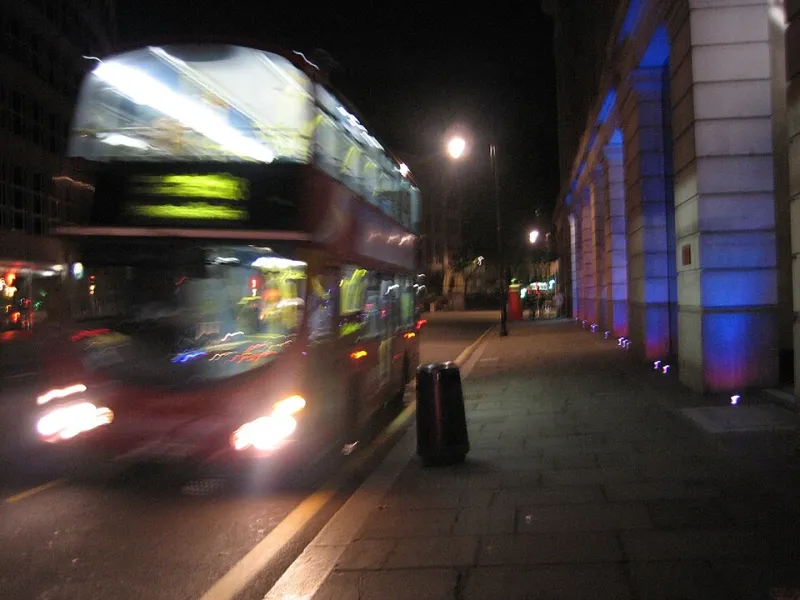
Photo: Alastair Rae from London, United Kingdom, CC BY-SA 2.0, via Wikimedia Commons
There's a specific kind of grief nobody's written the obituary for yet, so allow us: the night bus is dead. Not officially — the N29 still grinds up and down Blackhall Road, the N1 still trundles towards Elephant and Castle — but culturally? Gone. And we should probably talk about what we lost before we keep pretending the replacement is an upgrade.
What Actually Replaced It
Here's the modern exit strategy, in order of popularity: the Night Tube on Fridays and Saturdays, a lime-green e-bike if you're feeling brave, an e-scooter if you're feeling reckless, and a Uber if you're feeling flush. What's missing from that list is other people.
The Night Tube is brilliant, genuinely. It's fast, it's cheap, it's clean. It's also quiet. You get on at Leicester Square at 3:40am and the carriage is a museum of glowing faces — everyone scrolled into their own private afterlife, earphones in, watching the same ten-second clip on loop until the doors open at Stockwell.
The night bus was never quiet. That was the whole point.
The United Nations of the N55
Think back — really think back — to your worst and best night bus journey. The guy who narrated the entire route like a tour guide. The two strangers who got engaged somewhere between Holborn and Finsbury Park. The woman who had one shoe and zero regrets. The collective groan when someone asked the driver to stop, and the collective cheer when the kebab shop on the corner was still lit.
The night bus was the last room of the night. The club had a dress code and a door policy; the bus had neither. It was the great equaliser — bankers and bouncers and birthday parties all swaying on the same sticky floor at the same speed. You couldn't hide. You couldn't scroll. You had to be there, in all its grimy glory.
And yes, sometimes it was grimy in ways that weren't charming. Nobody's romanticising the fights, the creeps, the 90-minute crawl through roadworks on the A23. The Night Tube fixed real problems, particularly for women travelling home alone. That matters, and it's not up for debate.
But somewhere in the efficiency gains, we traded the mess for silence, and London's nights have felt a bit thinner ever since.
The Sobering Commute
There's something else, too. The modern journey home is a comedown machine. Fifteen minutes on a bike through empty streets with nothing but your own thoughts and a low battery warning — that's where the night actually ends, alone, in your head. The night bus delayed the ending. It was a buffer zone, a denouement. You arrived home when the story was properly finished, not mid-scroll through the group chat.
Now the night just stops. One minute you're in the club, the next you're unlocking your front door wondering why you feel like you've been cut adrift.
A Modest Proposal
We're not asking for the past back. But next time you're tempted to tap your phone for a ride, consider the bus. Sit upstairs if you can. Talk to a stranger if it feels safe. Watch the city do its slow, strange 4am reshuffle.
The night out doesn't end when the lights come up. It ends on the journey home — and London used to do that journey together.